

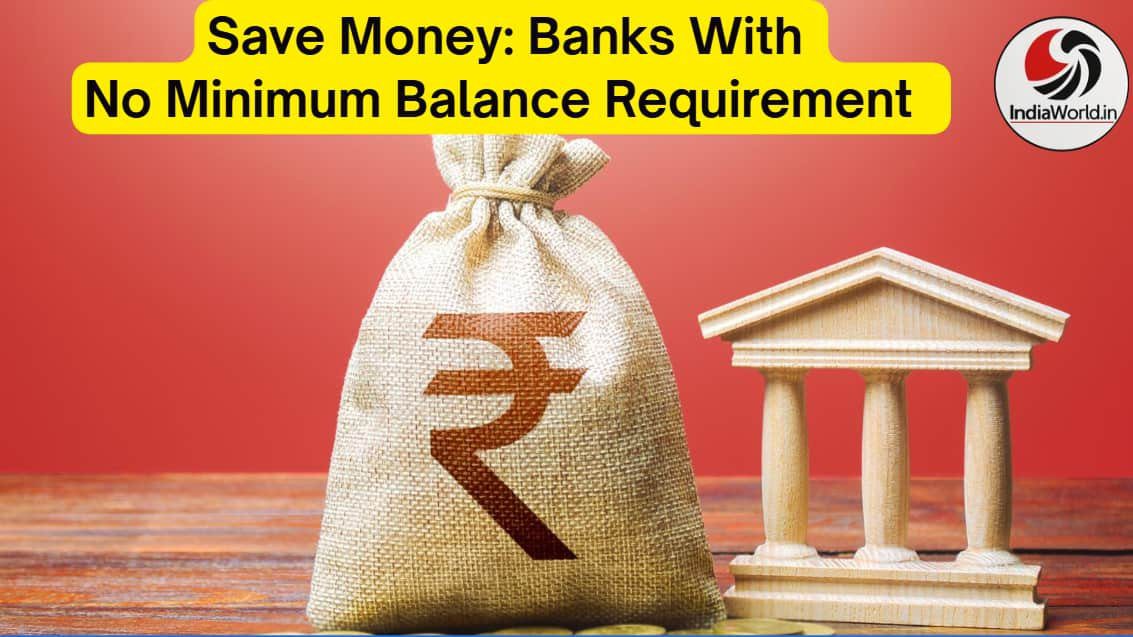
Why Do Banks Charge Minimum Balance? No Need To Manage Min Amount In THESE Banks
Most Indian banks require customers to maintain a minimum balance in their savings accounts. But why do banks charge this amount, and which banks allow you to skip it? Let’s break it down in simple terms.
Why Do Banks Charge Minimum Balance?
Banks charge a minimum balance to cover operational costs and ensure account activity. Maintaining a minimum amount helps banks:
- Offset costs of free services like ATM withdrawals, passbook printing, and online banking.
- Encourage customers to keep accounts active.
- Maintain liquidity for lending and investments.
If you fail to maintain the required balance, banks impose penalty charges, which can range from ₹100 to ₹600 depending on the bank and location.
RBI Guidelines on Minimum Balance
The Reserve Bank of India (RBI) allows banks to set their own minimum balance requirements. However, banks must:
- Clearly disclose charges to customers.
- Offer Basic Savings Bank Deposit Accounts (BSBDA) with zero balance facilities.
- Ensure financial inclusion by providing affordable banking options.

Banks That Don’t Require Minimum Balance
Good news: several banks now offer zero balance savings accounts. These accounts are designed for students, low-income groups, and digital-first customers.
Here’s a list of banks where you don’t need to maintain a minimum balance:
- State Bank of India (SBI) – BSBDA and Jan Dhan accounts
- Punjab National Bank (PNB) – zero balance accounts for financial inclusion
- HDFC Bank – InstaAccount and BSBDA options
- ICICI Bank – zero balance digital accounts
- Post Office Savings Account – no minimum balance required
- Payments Banks (Paytm, Airtel, India Post) – fully digital, zero balance accounts
Benefits of Zero Balance Accounts
Choosing a zero balance account means:

- No penalty charges
- Free ATM withdrawals (limited)
- Easy access to digital banking
- Inclusion in government subsidy schemes
For students, pensioners, and rural households, these accounts are a lifeline.
Should You Switch to Zero Balance Accounts?
If you often struggle to maintain the required balance, switching to a zero balance account is smart. However, note that:
- Some premium services may not be available.
- Transaction limits may apply.
- Interest rates remain similar to regular accounts.
The Bigger Picture
India’s banking system is moving toward financial inclusion. With digital banking and government-backed schemes, more citizens can access banking without worrying about minimum balance penalties.
For millions of Indians, this means freedom from hidden charges and easier access to essential financial services.
FAQs on Minimum Balance
Q1. Why do banks charge minimum balance? To cover operational costs and ensure account activity.
Q2. Which banks offer zero balance accounts? SBI, PNB, HDFC, ICICI, Post Office, and Payments Banks.
Q3. What happens if I don’t maintain minimum balance? Banks impose penalty charges ranging from ₹100–₹600.

Q4. Are zero balance accounts safe? Yes, they are regulated by RBI and offer standard banking services.
Q5. Can I convert my regular account to zero balance? Yes, by applying for BSBDA or Jan Dhan accounts.
Read also : July 1 Financial Shake-Up: 6 Big Changes You Must Know
External Links (Trusted Sources)
- RBI Minimum Balance Guidelines
- SBI Zero Balance Account
- ICICI Bank Zero Balance Account
- HDFC Bank Savings Account
- Wikipedia: Banking in India (en.wikipedia.org in Bing)
🔔 More updates follow us: https://x.com/vishnu73 💬 Join our Arattai Group: aratt.ai/@indiaworld_in 👉 Telegram Channel: t.me/indiaworld_in 📰 Visit IndiaWorld.in for:
- Latest News
- Top Stories 🌍 ET World → indiaworld.in/et-world