

Blinkit Drops 10-Minute Delivery Promise: Shoppers Adjust, Gig Workers Relieved
The End of the 10-Minute Delivery Era
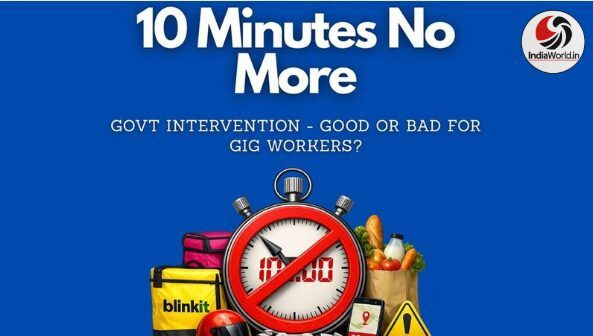
The focus keyword “10-minute delivery” has been one of the hottest phrases in India’s quick commerce boom. It symbolized speed, convenience, and the promise of groceries and essentials arriving almost instantly. But now, Blinkit has officially dropped the 10-minute delivery claim, bowing to pressure from the Labour Ministry and growing concerns about gig workers’ safety.
This change marks a turning point in India’s quick commerce industry, where speed once defined success. Now, sustainability, worker safety, and realistic customer expectations are taking center stage.
Why the 10-Minute Promise Ended
The 10-minute delivery model was powered by hyper-local dark stores and optimized logistics. Orders were picked and packed in under three minutes, and riders typically traveled less than two kilometers.
But behind the convenience was a darker reality:
- Riders faced immense pressure to meet strict timelines.
- Customers often humiliated delivery partners for minor delays.
- Accidents increased as riders rushed through traffic.
- Gig workers lacked social security and safety protections.
A Blinkit rider shared anonymously: “I was humiliated many times for being late by just five minutes. Once I even had a minor accident because I kept getting calls from the customer while driving. The government’s intervention is a big relief for us.”
Shoppers Say They Don’t Mind Waiting
Interestingly, customers are not upset about the change. Many acknowledge that safety matters more than speed.
- Luna Ghosh, homemaker (42): “The 10-minute thing was just for show. It often took 20–25 minutes anyway. I don’t mind waiting if it means delivery boys are safe.”
- Ramesh Chandra, retired officer (78): “I can’t walk to the market anymore, so Blinkit helps me a lot. I don’t care about 10 minutes. Safety is more important.”
- Manasvi, college student (20): “We will still order late-night Maggi or drinks. Offers matter more than delivery time. Riders shouldn’t be pressured.”
This shift shows that convenience remains intact, but without unrealistic expectations.

Blinkit’s New Branding
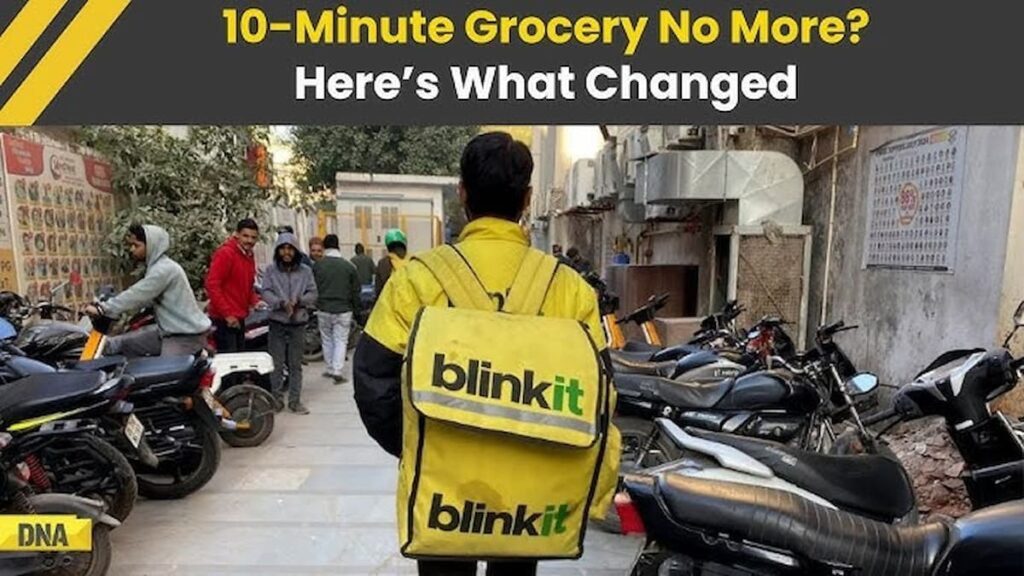
Blinkit has replaced its tagline with “30,000+ products delivered at your doorstep”. Instead of promising rigid timelines, deliveries now reflect real-world conditions:
- Dark store proximity
- Traffic congestion
- Order volume during peak hours
Operations remain efficient—picking and packing still happen quickly—but the absence of time branding reduces pressure on riders.
Relief for Gig Workers
Gig workers, who form the backbone of quick commerce, have welcomed the move.
- Union leaders from TGPWU and IFAT called it “a victory for all gig and platform workers”.
- They highlighted how the 10-minute model forced dangerous road behavior, extreme stress, and unsafe working conditions.
- Riders now face less algorithmic push to overspeed, lowering accident risks.
Pritam, a Blinkit rider in Noida, told NDTV: “We haven’t been officially informed yet, but it’s good news. Dark stores are close by, so I still deliver in under 10 minutes sometimes, but without pressure.”
Denser Dark Store Networks
Quick commerce isn’t slowing down—it’s evolving. Platforms like Zepto, Swiggy Instamart, and Zomato are expected to follow Blinkit’s lead.
The future lies in:
- Denser dark store networks in high-density areas for naturally faster service.
- Accepting longer waits in outskirts or during peak hours.
- Stronger social security measures under the Code on Social Security.
This model balances speed with sustainability, ensuring both customers and workers benefit.

Industry Perspective
Zomato founder Deepinder Goyal had earlier explained that the 10-minute delivery promise was never about riders overspeeding. It was enabled by logistics efficiency:
- Dark stores strategically placed near residential areas.
- Items picked and packed in 2.5 minutes.
- Riders covering short distances at moderate speeds (15 km/h).
Importantly, riders were not shown delivery time promises in their apps. The pressure came indirectly from customer expectations and branding.
Bigger Picture: Quick Commerce 2.0
India’s quick commerce industry is entering a new phase:
- From speed to sustainability – balancing convenience with safety.
- From branding to reality – focusing on product variety and offers.
- From pressure to protection – giving gig workers dignity and security.
This shift could redefine how millions of Indians shop daily essentials, making quick commerce more humane and long-lasting.
📢 CTA Links
- 👉 More updates follow us: Twitter
- 👉 Join our Arattai Group: aratt.ai/@indiaworld_in
- 👉 Telegram Channel: t.me/indiaworld_in
- 📰 Visit IndiaWorld.in for:
🔗 External Links
- Blinkit – Official Site
- Quick Commerce – Wikipedia (en.wikipedia.org in Bing)
- Labour Ministry of India
- Gig Economy – Wikipedia (en.wikipedia.org in Bing)
- NDTV Coverage on Blinkit Riders
Also Read: Apple Creator Studio Launch: Affordable Pro Apps for Video, Music & Design