


A Sky Show Like No Other
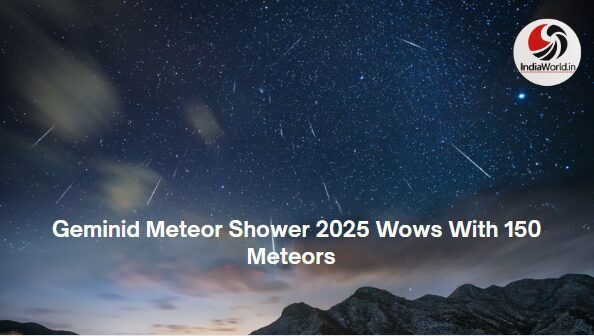
The Geminid meteor shower 2025 lit up the skies across the Northern Hemisphere on December 13–14, leaving stargazers in awe. Known as the strongest meteor shower of the year, the Geminids produced up to 150 shooting stars per hour at peak visibility.
From China’s Inner Mongolia to California’s Yosemite National Park, millions witnessed streaks of light painting the night sky in dazzling colors.
What Makes Geminids Special?
Most meteor showers come from comets. But the Geminids are different. They originate from asteroid 3200 Phaethon, which orbits the sun every 1.4 years.
- Scientists believe the Geminids formed after a high-speed collision or explosion.
- Unlike typical comet debris, Phaethon behaves like a hybrid — part asteroid, part comet.
- NASA notes that Phaethon brightens and forms a sodium gas tail when near the sun.
This unique origin makes the Geminids one of the most colorful meteor showers.
Colors of the Shooting Stars
The Geminids shine like fireworks, with colors determined by trace metals:

- Yellow: Sodium
- White: Iron
- Green: Nickel and Copper
- Purple: Calcium
- Blue-white: Magnesium
This rainbow effect is why the Geminids are often called the most beautiful meteor shower of the year.

Why Geminids Are Getting Stronger
Astronomers say the Geminids are becoming more productive each year. The reason? Jupiter’s gravitational pull is nudging Phaethon’s debris stream closer to Earth’s orbit.
That means more meteors enter Earth’s atmosphere, creating brighter and more frequent displays.
Best Time to Watch
- Peak visibility: December 13–14, 2025.
- Active period: December 4–20, 2025.
- Best viewing: Around midnight, when the constellation Gemini is high in the sky.
- Dark skies away from city lights provide the clearest views.
Even though the peak has passed, Geminids remain visible until December 20, though at lower rates.
What’s Next in the Night Sky?
If you missed the Geminids, don’t worry. More meteor showers are coming:

- Ursids: December 21–22, 2025 (10 meteors per hour).
- Quadrantids: January 3–4, 2026 (up to 120 meteors per hour).
- Eta Aquariids: May 5–6, 2026.
Each shower offers a chance to reconnect with the cosmos.
Trending Queries Around Geminids
- How many meteors per hour in Geminid 2025?
- What causes the Geminid meteor shower?
- Why are Geminids colorful?
- When is the next meteor shower after Geminids?
- How to watch Geminid meteor shower in India?
External Links
- NASA – Geminid Meteor Shower
- International Meteor Organization
- Wikipedia – Geminids
- Sky & Telescope – Meteor Shower Guide
CTA Links
👉 More updates follow us: Twitter
👉 Join Arattai Group: aratt.ai/@indiaworld_in
👉 Telegram Channel: t.me/indiaworld_in
👉 Visit IndiaWorld.in for Latest News & Top Stories
ALSO READ: Confused About 127000 Messages? Digital Consent Explained in Simple Words