


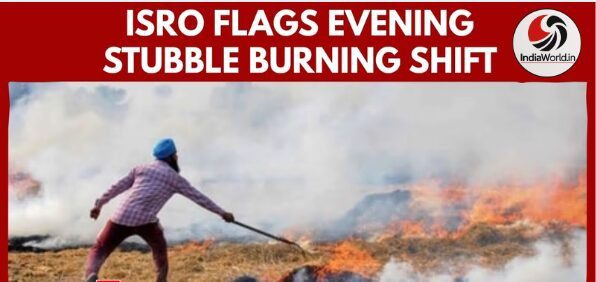
Farmers Outsmart Satellites: Evening Stubble Burning Worsens Delhi’s Air
A New Twist in the Stubble Burning Story
The focus keyword: stubble burning in India has once again dominated headlines this winter. Farmers in Punjab and Haryana have shifted the timing of crop residue fires to late evening, between 4 p.m. and 6 p.m., according to NASA and ISRO analyses.
Traditionally, stubble fires were lit in the early afternoon. But now, this shift means satellite sensors like MODIS and VIIRS often miss the fires, underestimating pollution levels. The result? Authorities may be caught off guard, while Delhi and other cities choke under worsening smog.
Why Farmers Changed the Clock
Experts believe farmers are adjusting burning schedules to avoid detection and fines. With stricter enforcement and penalties in place, evening fires make it harder for satellites and drones to capture real-time evidence.
NASA scientist Hiren Jethva noted that while the overall 2025 burning season looked familiar, the timing shift was clear. Fires intensified in late October, and Delhi’s air quality plummeted soon after.

The Science Behind the Smog
Evening fires coincide with a shallower planetary boundary layer and weaker winds. This traps pollutants close to the ground overnight, worsening air quality through the night and early morning.
NASA’s Pawan Gupta explained:
- On a single day, stubble burning can contribute 40–70% of Delhi’s pollution.
- Over a month, the share drops to 20–30%.
- Annually, it accounts for less than 10%, but the seasonal spikes are devastating.
Meteorological factors like low temperatures and stagnant winds add complexity, making pollution harder to disperse.
Numbers Tell the Story
- 2025 fires: More than 2024, 2020, and 2019, but fewer than 2021–2023.
- Peak fire timing: Shifted from 1:30 p.m. in 2020 to 5:00 p.m. in 2024.
- Satellite blind spots: MODIS and VIIRS miss evening fires, prompting reliance on high-frequency satellites like GEO-KOMPSAT-2A.

Public Health and Policy Impact
This timing shift complicates:

- Air quality monitoring – Pollution levels may be underestimated.
- Public health response – School closures and emergency advisories may come too late.
- Policy enforcement – Farmers evade detection, weakening deterrence.
Authorities now face the challenge of adapting monitoring strategies. More frequent satellite passes and ground-based sensors may be needed.
Trending Queries Around the Issue
- Why is stubble burning worsening Delhi’s air?
- How do satellites detect stubble burning?
- What is MODIS and VIIRS?
- Can evening stubble fires be tracked?
- How much does stubble burning contribute to Delhi smog?
CTA Links
- Latest News
- Top Stories
- ET World
- Wikipedia: Stubble Burning
- NASA Earth Observatory
- Punjab Govt Agriculture
- Quora: Why stubble burning continues in India
🔗 More updates: Twitter | Telegram | IndiaWorld.in
Also Read: Panic in Ahmedabad: Multiple Schools Receive Bomb Threat Emails