

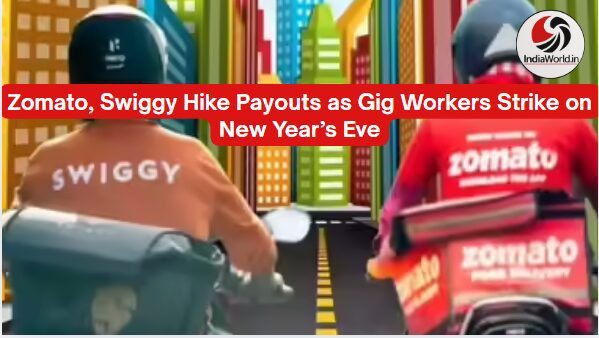
Zomato, Swiggy Raise Payouts as Gig Workers Strike on New Year’s Eve
Festive Rush Meets Labour Unrest
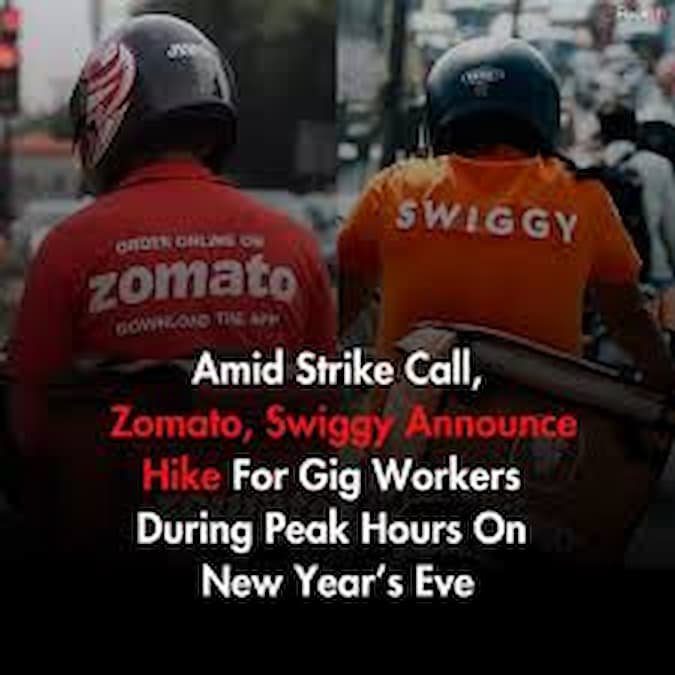
Food delivery giants Zomato and Swiggy announced higher incentives for delivery partners on December 31, 2025, one of the busiest nights of the year. The move was framed as part of their “annual festive protocol,” but it came against the backdrop of a nationwide strike call by unions like the Telangana Gig and Platform Workers’ Union (TGPWU) and the Indian Federation of App-Based Transport Workers (IFAT).
- Zomato’s offer: ₹120–₹150 per order during peak hours (6 pm–12 am), with potential daily earnings up to ₹3,000. Penalties for cancellations were waived.
- Swiggy’s offer: Up to ₹10,000 across Dec 31–Jan 1, with peak-hour earnings of ₹2,000 for the six-hour window.
These payouts were designed to keep services running smoothly despite strike threats.
Why Gig Workers Are Striking
The strike wasn’t just about money—it was about dignity, safety, and sustainability in India’s booming gig economy.
Key Demands from Workers
- Remove 10‑minute delivery option: Workers argue it creates unsafe pressure.
- Restore old payout structures: Earlier festive rates were higher and more stable.
- Fair wages: Unions demanded ₹20/km and a guaranteed monthly earning of ₹24,000–₹40,000.
- Legal recognition: Gig workers want inclusion under India’s labour laws.
- Safety & dignity: Calls for fixed hours, maternity protection, and workplace safety measures.
The December 31 strike followed a flash strike on December 25, which disrupted services by 50–60% in several cities.

Scale of the Strike
- Participation: Over 1.7 lakh workers confirmed involvement nationwide.
- Platforms affected: Zomato, Swiggy, Blinkit, Instamart, Zepto, Amazon, Flipkart.
- Impact: Potential disruption of food delivery, quick commerce, and e-commerce during one of the busiest nights of the year.
Government Response: Telangana Leads the Way
Telangana became the first state to act. Labour Minister Vivek Venkatswamy announced the Gig and Platform Workers Welfare Bill, 2025, aimed at protecting workers.
Highlights of the Bill
- Registration & Unique IDs for all gig workers.
- Social Security Fund financed by aggregator platforms.
- Welfare Board to oversee benefits and grievance redressal.
- Transparency mandate: Platforms must disclose algorithmic decisions on pay and ratings.
- Safety & health provisions for delivery partners.
This bill could become a model for other states, marking a turning point in India’s gig economy.
Bigger Picture: India’s Gig Economy at Crossroads
India’s gig economy employs millions of workers, but most lack formal protections. The New Year’s Eve strike highlighted systemic issues:
- Falling earnings despite rising demand.
- Algorithm-driven pressure with little human oversight.
- Exclusion from labour entitlements like gratuity, maternity leave, and minimum wages.
Experts say the strike may push both companies and governments to rethink the future of platform work.

Trending Queries & Evergreen Angles
- “Zomato Swiggy strike New Year 2025”
- “Gig workers demands India”
- “Telangana Gig Workers Bill explained”
- “10-minute delivery controversy”
- “Future of gig economy in India”
Final Word
While Zomato and Swiggy tried to cushion the blow with festive payouts, the nationwide strike exposed deep cracks in India’s gig economy. With Telangana’s welfare bill setting a precedent, 2026 may see stronger regulations and a redefined relationship between platforms and workers.
CTA Links
- More updates: X.com/vishnu73
- Join Arattai Group: aratt.ai/@indiaworld_in
- 👉 Telegram Channel: t.me/indiaworld_in
- 📰 Visit IndiaWorld.in
External References:
Also Read: Swiggy, Zomato, Amazon strike: Why gig workers are protesting on Christmas & New Year’s Eve